EXCLUSIVE INTERVIEW WITH ANDRÉS JORNET, SPORTING PRESIDENT
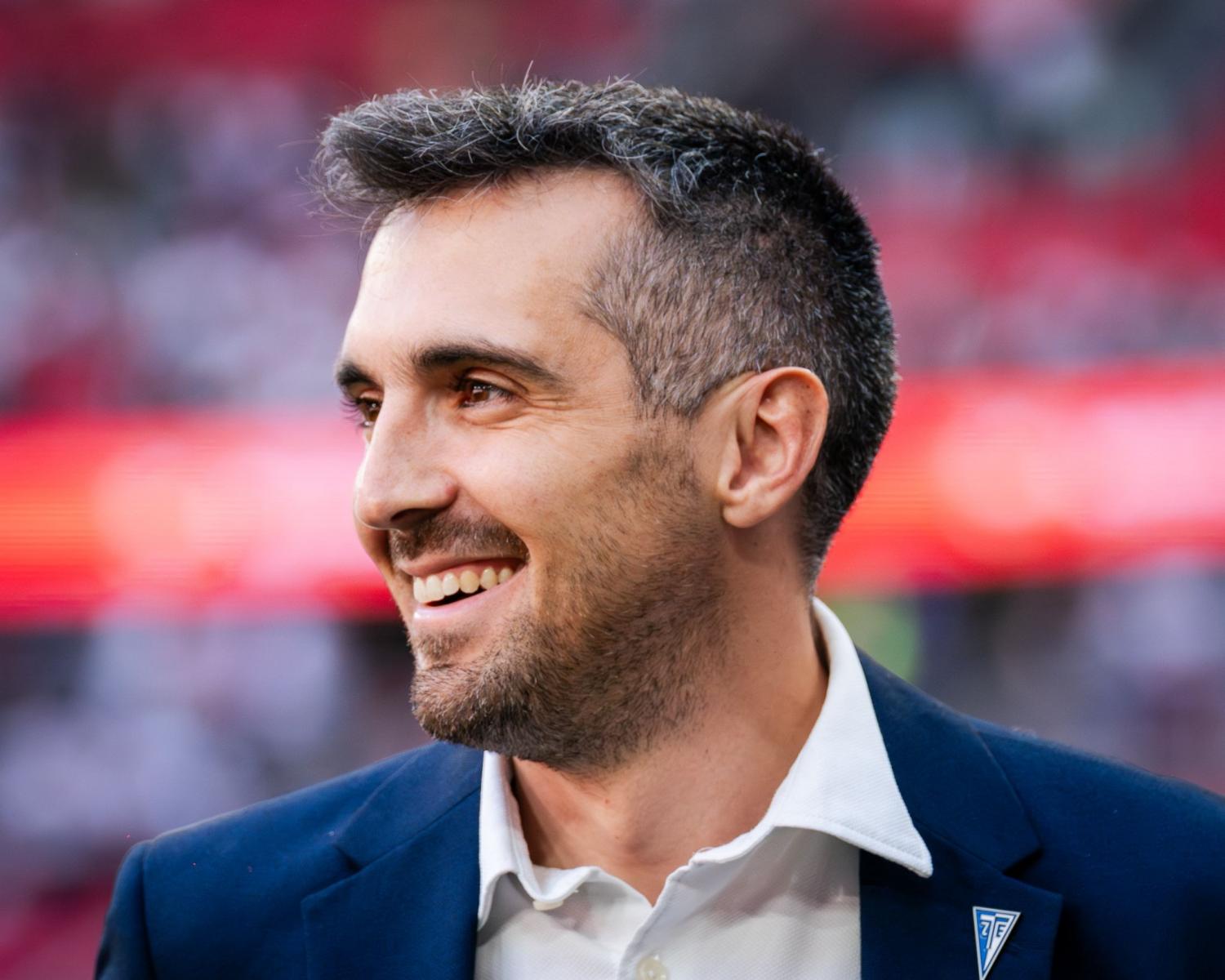
The 2026 summer transfer window has come to an end, once again bringing significant changes to our squad. A number of new players have joined the reserve team, while several key members of the first team have departed, replaced by young players.
Why do we sell so many players? Why are we signing fewer Hungarian footballers? What criteria do we use when building our squad, and what can supporters expect in the future?
Andrés Jornet, our President in charge of sport, answered these and other questions in our exclusive interview.
OPEN ZTE BREAKS WITH THE TRADITIONAL WAY OF LOOKING AT THINGS
Our club recently launched the ZTE Project, through which we want to continuously show the economic, sporting and strategic connections that shape the club's operations and our decisions. Why is this important, and how can it be connected to the sporting side?
For me, Open ZTE is one of the boldest things a football club can do.
In football, we very often see that the way clubs operate is not completely transparent. We provide information about results and incoming and outgoing players, but we rarely talk about the considerations behind these decisions, and almost never show the numbers. We often expect supporters to trust us without giving them the tools to understand the background to our decisions.
Open ZTE breaks with this approach, and I believe its significance goes far beyond what happens on the pitch.
The project's most important value is something simple yet extremely important: creating context. If we understand that player sales are not signs of weakness, but pillars of the structural model through which the club sustains itself and remains competitive, supporters can gain a completely new perspective on the club.
The gap between operating costs and revenues other than transfer income is not a figure we should be ashamed of. It is the reality of operating a club that is building seriously, devoting significant resources to development, and creatively looking for ways to bridge that gap with a model that simultaneously creates sporting value and external recognition.
I am also proud that the project includes our investment in youth development infrastructure. The €1 million investment in the academy is not an item that appears in the official programme of a match. It is a long-term investment whose results take time, and whose full impact on the pitch is expected to become truly visible only in three or four years.
Open ZTE gives us the opportunity to explain now why this investment matters, even if we will only see its full results years later. Ultimately, I believe it sends a message to our supporters: you are partners in this process, not merely observers, and I think there are few things a football club can say that show more respect to the people who support it day after day.
NO TRANSFER WINDOW EVER GOES EXACTLY ACCORDING TO PLAN
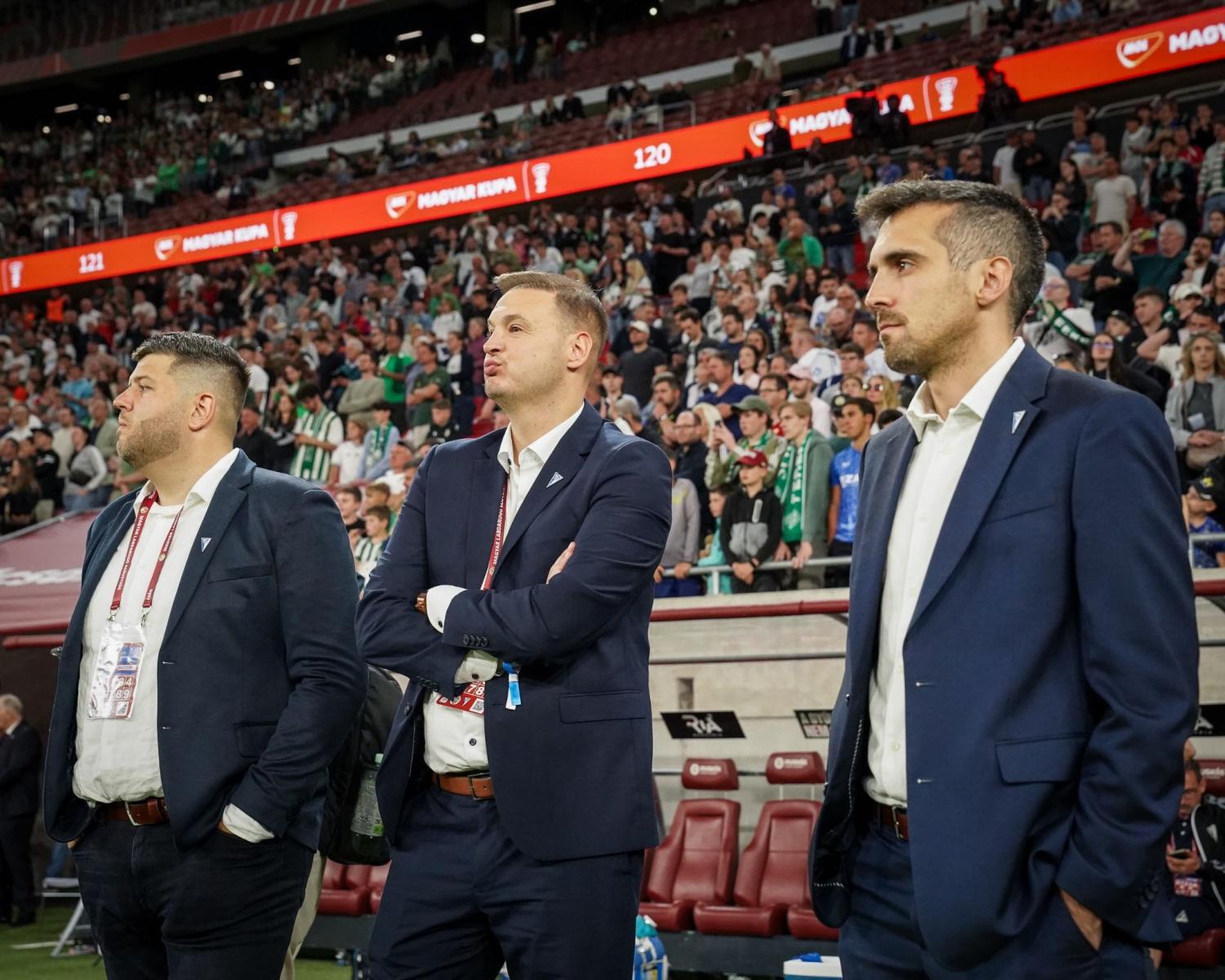
The end of the summer transfer window is always a good opportunity to take a step back and assess the past few months. To what extent did we manage to implement the original plan with which we entered the transfer window?
Overall, we are satisfied with how the transfer window went. We developed a clear framework: it was not simply about names, but also about the philosophy and player profiles we wanted to bring in, and I believe we stayed true to that.
Of course, no transfer window ever goes exactly according to plan. There are always variables: market conditions, players' decisions, timing. But the foundations of what we decided remained intact. We wanted to renew the squad with young talents hungry to play and develop, while retaining a competitive core, and I feel we achieved that. Squad building is an ongoing process and the work does not stop here, but I believe we have a team with genuine quality and the mentality required to represent ZTE.
WE ARE NOT A CLUB THAT HOLDS PLAYERS BACK
Several key players who had important roles in the recent period have left. To what extent was this part of the planned restructuring, and how did the decision emerge that the team needed to move in a new direction?
Yes, it was planned. We had been thinking about the club's direction for some time, and renewing the squad was part of that vision. At the same time, I want to be honest: some departures were initiated by the players themselves, and we respected that. If a player has an opportunity to take a significant step forward in their career – financially or in terms of the level of competition – then we believe it is right to consider it, provided the club's interests are properly protected.
We are not a club that holds players back. This approach is also part of what makes ZTE an attractive destination: players know that if they perform well here, the club will support them in taking the next step. This creates goodwill and a strong reputation, which in turn helps us attract the next wave of talent.
Our career pathway is illustrated by one statistic: over the past twelve months, we have broken the club record for the highest transfer fee received three times. This is not a coincidence. We are particularly proud of Akpe Victory's move to Basel. The fact that he immediately established himself in the starting lineup and continues to perform at a high level shows that something positive is happening at ZTE: we are not only preparing players for this club, but also for the next step in their careers. That is exactly the kind of external validation we are working towards.
MENTALITY AND LEADERSHIP ARE OFTEN MORE IMPORTANT THAN AGE
Several experienced players were among those who left, while many of the arrivals are young footballers. What balance do we want to create between experience and potential in such a young squad?
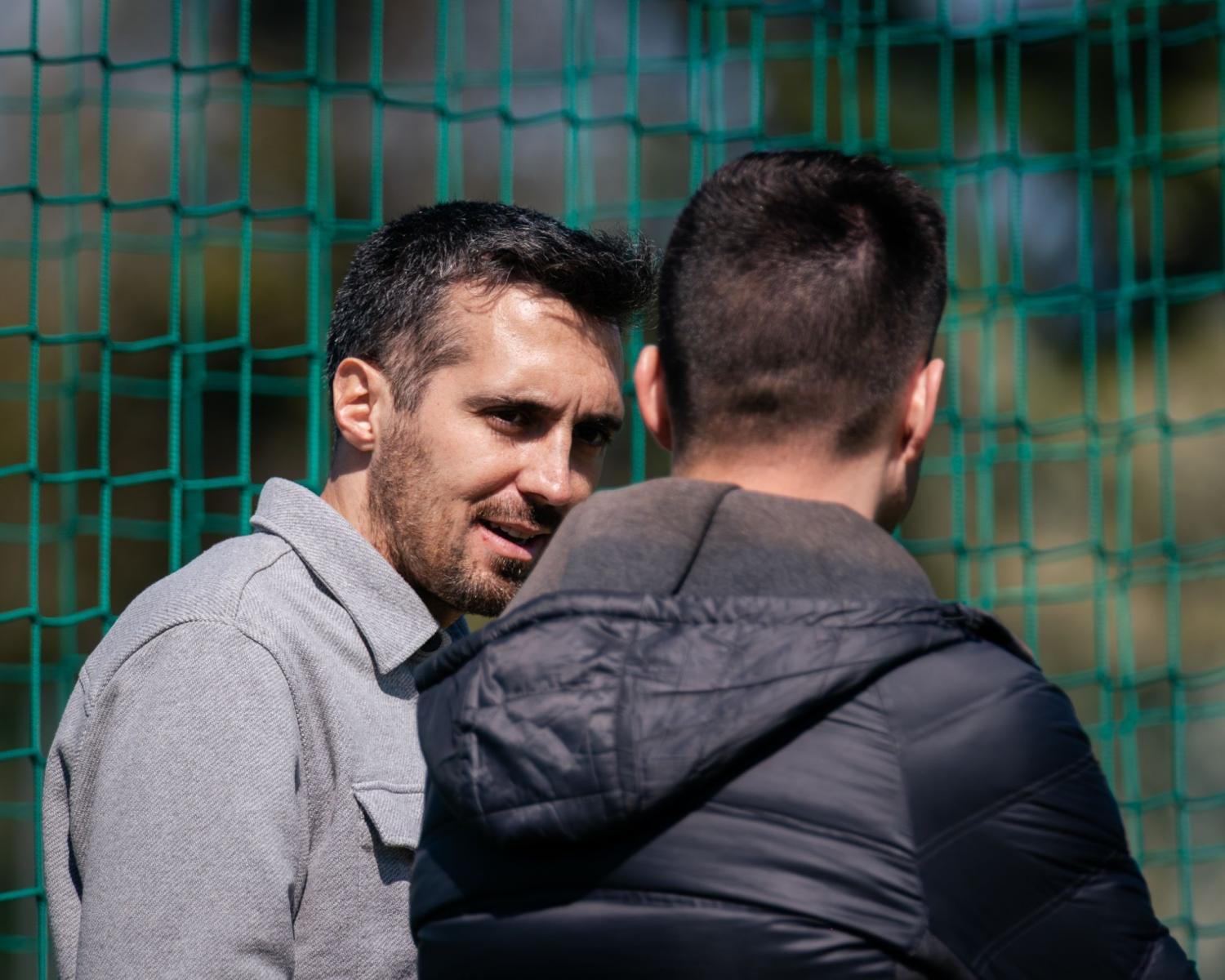
This is one of the central questions we are constantly addressing. A very young squad brings energy, ambition and development potential, but it also needs reference points: players who have already experienced difficult moments and know how to handle the emotional side of competitive football. We are aware of that.
At the same time, I would challenge the assumption that experience is necessarily linked to age. Many of the most important qualities we look for in players – leadership, composure under pressure, and training-work ethic – can be found in young players just as much as in older ones. Mentality and leadership are often more important than age. We do not necessarily look for players based on age; we look for people with the right character who, regardless of age, are capable of having a positive impact on the group.
WE TRY TO PROVIDE TIME AND OPPORTUNITY
We have previously spoken about the club philosophy that “we try not to sign players directly for the first team.” What does this mean in practice, and why is it important?
It means that when we sign a player, we think in terms of a process, not simply the position they will occupy in the starting eleven. We want the player to first get to know the club, the city, the culture of Hungarian football and the way we work every day. That takes time. A player who is immediately placed in high-pressure situations after arriving is more likely to struggle, and that is not good for either the player or the team.
We try to provide time and opportunity: sometimes through ZTE II, sometimes by carefully managing minutes in the first team, and sometimes simply through daily integration into the training environment. There have been cases where we brought in a player six or twelve months before we expected them to take on a key role, precisely so they would have time to adapt. It is a patient, slower approach, but we believe it leads to more sustainable results.
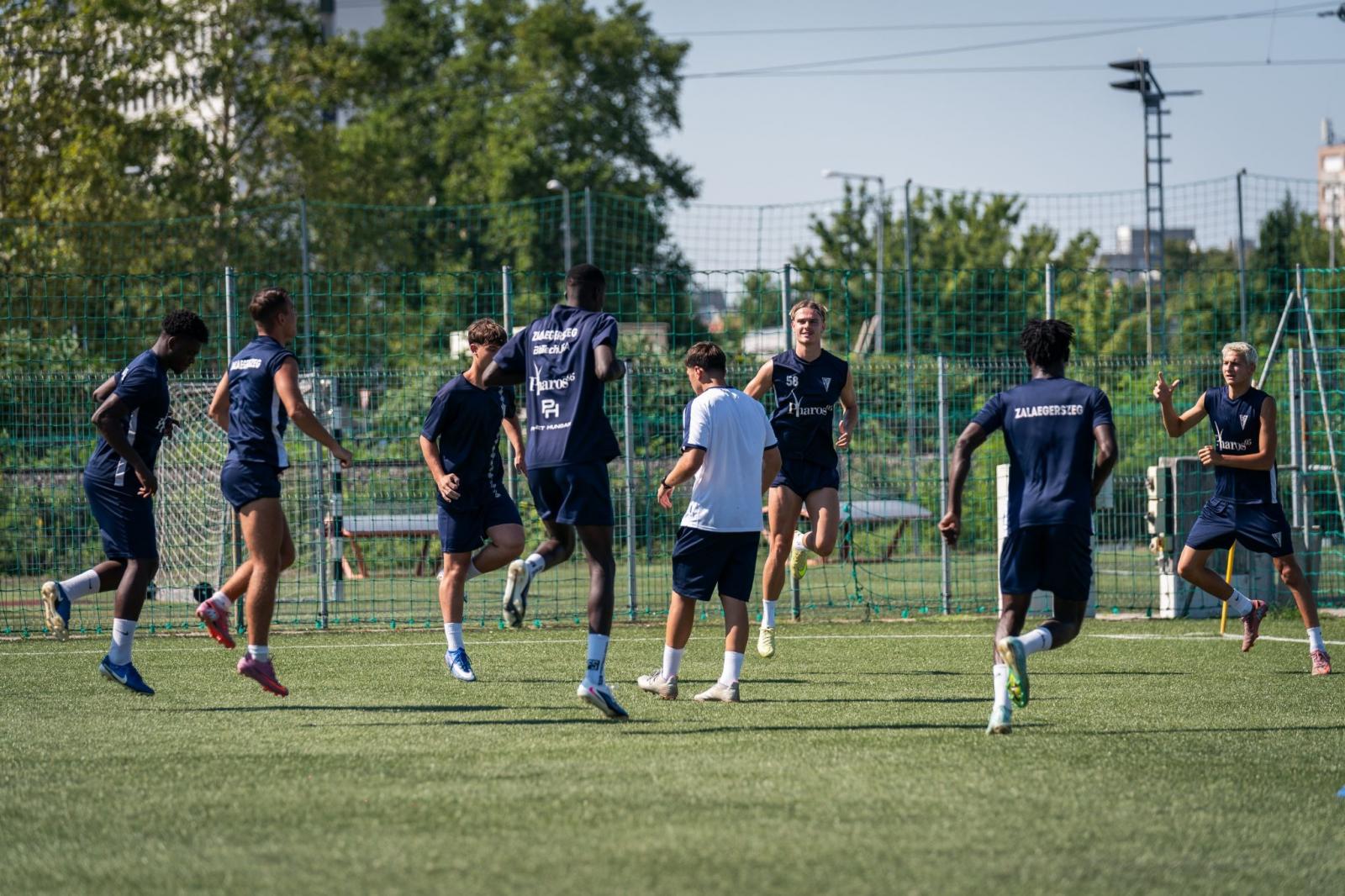
This year, however, several young players had to join the NB I squad relatively quickly. How much does the original plan change in such circumstances?
That comes with managing a young squad when the team is going through a transitional period. Circumstances sometimes accelerate events and force us to make decisions: injuries, form, the current state of the squad. In those situations, we have to trust the preparation we have done and the quality of the players we have signed.
Did this affect the original plan? In some ways, yes, but I would not see it purely as a problem. Sometimes, when a player is thrust into the spotlight earlier than expected, it brings out qualities we had not fully anticipated. The most important thing is how we support these players in that situation: through the coaching staff, the environment and the attitude of their teammates. I believe we are doing that well.
WE MONITOR A PLAYER'S ATTITUDE EVEN WHEN THEY ARE NOT PLAYING
What criteria do you use to track players' development, and how do you decide when someone is ready to play consistently in the NB I?
There is no single formula for this, and I think anyone who says there is is oversimplifying the question. Development is multidimensional. Of course, we look at technical and tactical progress, but also at how a player responds to difficulties, how they communicate within the group, and how they manage their preparation and recovery outside training.
We monitor their attitude even when they are not playing. A player who continues to work hard and learn even when they are not in the starting eleven reveals a great deal about their character. To make the transition to consistent first-team football in the NB I, all these elements need to come together. We try to communicate honestly and continuously with everyone and adjust the plan along the way, while always keeping the shared objective as our guide.
ZTE II IS OF FUNDAMENTAL IMPORTANCE
Speaking of young players: what role does ZTE II play in this process? How important is the second team in helping incoming players gradually adapt to the club and to Hungarian football?
ZTE II is of fundamental importance. It is the bridge. The level of investment directed into the second team directly reflects the importance we attach to it within the overall structure. It is not a peripheral operation; it is one of the pillars of our player-development model. It allows players who are still going through the adaptation process to get genuine competitive minutes in a real environment, without the full burden of expectations that comes with the first team.
For a newly arrived player, particularly someone coming from another culture and adapting to a new language, a new city and a new style of football, it is extremely valuable to be able to play regularly at this level. It accelerates the adaptation process in a way that training alone cannot provide.
A good example of how this model works in practice is Gergő Bodnár. He joined the club through ZTE II, developed in that environment, and then moved up to the first team relatively quickly. From there, he became a regular starter and an important player for us before we sold him the following winter. These are exactly the kinds of stories we want to repeat.
IN THE COMING YEARS, WE WANT TO DEVELOP HUNGARIAN TALENT FROM WITHIN
Relatively few Hungarian players joined, and several of them are getting opportunities in lower divisions. How and why did this direction emerge?
I want to answer this question directly and honestly, because we are aware that it is an important topic. In Hungary, there is an incentive system related to the use of Hungarian players, which we respect and understand the purpose of. However, for a club like ZTE, which does not have an elite-level academy like several other NB I clubs, competing in the market for Hungarian players is difficult. The incentive structure has driven up the value of Hungarian players, and the players themselves naturally understand the bargaining position this gives them.
To operate competitively within this system, we would need to field eleven or twelve Hungarian players consistently, which simply is not realistic with our current squad structure without compromising the overall quality of the team. That is why we consciously decided not to build the squad around complying with the incentive rule, but around what we believe provides the strongest competitive foundation.
This is not a rejection of Hungarian football or Hungarian players, and I want to make this clear: we are placing a strong financial focus on our academy, with the aim of developing Hungarian talent from within over the coming years.
ADDING VALUE WHILE DEVELOPING
Among this year's arrivals are several players with strong backgrounds, including players developed in the systems of clubs such as Köln or Dortmund II, while the experienced European number nine also represents a reinforcement. Have players such as Danylo, Matheus and Emin arrived as players who can contribute immediately and add value to the team from the outset?
Players who have spent years in high-level youth environments, such as Bundesliga academies, bring a certain degree of adaptability with them. From a young age, they have experienced structured methodology, high professional standards and an intensive training environment. This does not mean they arrive as finished players, but it provides a foundation that generally makes it easier to adapt quickly to new environments. They are accustomed to learning, adapting and competing internally.
We see players such as Emin, Dany and Matheus, who also have European senior-football experience, as profiles capable of making a meaningful contribution to the team while continuing to develop.
THE KEY IS COMMUNICATION
An international outlook can also bring new challenges. How do you create a dressing room in which players from different football cultures quickly become a team while also embracing ZTE's identity?
It is a real challenge, and I would not want to minimise it. Language, cultural references and habits can all create friction if they are not handled carefully. At the same time, this is a challenge that clubs across Europe face every week. Look at the Premier League, where fewer than three English players feature in the average starting eleven. Or clubs such as Como, Real Madrid and PSG, where national diversity is treated not as an obstacle but as part of the professional environment.
The key is communication, a shared football identity and a clear understanding of what the club stands for. When players understand what ZTE means – its history, its community and its ambitions – and when they feel respected and supported as individuals, nationality becomes secondary. We are working hard on creating this environment right now.
For supporters, it is always important to have players they can feel connected to, while the club's development model is increasingly based on international players. How can you find the balance between an international squad and a connection to ZTE?
I believe supporters connect with a team when they see genuine effort, competitive spirit and a style of play that excites them, regardless of where the players come from.
Fighting spirit, resilience and pride in the badge – these values transcend nationality. They are values that the Zala region has always represented, and we want every player who wears this shirt to take these values onto the pitch.
Of course, when a player who grew up in Zala County and came through the local system achieves this, it carries an additional emotional significance for supporters, and we want this to be possible in the future through our academy work. However, we cannot sacrifice the quality of the squad for the sake of symbolic balance. Our aim is for the players here – wherever they come from – to represent the club's values with the same conviction.
THE FOUNDATIONS ARE IN PLACE
It has naturally still been visible in the matches so far this season that a new squad needs time to gel.
We are very much taking that into account. From the outside, because of the pressure created by results, it can be tempting to expect immediate cohesion from a group that has only been together for a few weeks.
That is not realistic. Building mutual understanding requires time, shared experiences and repetition. What I can say is that the trajectory of development is more important than the starting point.
We started last season in a similar way, and the team developed significantly over the course of the months. Clubs and agents across Europe who followed that season – and many did, as several of our players were subsequently signed by foreign clubs – saw a team improving week by week.
I expect the same trajectory this year. The foundations are in place; the process needs time.
I WANT TO SEE ZTE BECOME A REFERENCE POINT
If the desired model can be built consistently, how can we imagine ZTE in three to five years? What player profiles, squad structure and role in Hungarian football would you like to see for the club?
I want to see ZTE become a reference point, not only in Hungarian football but also as an internationally recognised club with a clear and credible model. A club that intelligently scouts a broad player market, develops players within a defined football identity, and produces players who later represent their national teams – whether Hungary or another country.
I want clubs and agents across Europe to think of ZTE when a young player needs the right environment for the next step in their career. We are already seeing encouraging signs: foreign clubs and agents are contacting us more and more often, which shows that the project is receiving positive recognition. Results are always the ultimate benchmark, but reputation and infrastructure outlast individual results.
In three to five years, I want that reputation to be firmly established.
Finally, if you had to highlight three things for supporters from what we are building now, and what should make them patient and hopeful, what would they be?
THE FIRST IS THE DEVELOPMENT TRAJECTORY.
Last season began in a similar way in terms of results, and the team showed week after week that it was capable of developing. The improvement was visible and continuous, as confirmed by how many clubs came to watch our players and ultimately signed them. Things like that do not happen if people do not see genuine value.
THE SECOND IS EXTERNAL RECOGNITION.
Over the past twelve months, we have broken our club record for the highest transfer income three times. The fact that clubs from several countries followed our performances and invested in players who developed at ZTE is one of the most important forms of feedback we can receive. It means the project is not just words. In football, professionals whose job is precisely to recognise and assess these things can see it, value it and place their trust in it.
THE THIRD IS THE COMMUNITY.
There is real hunger and desire in this team. Young players who feel supported and understand the opportunity in front of them generally find a way to rise to the challenge.
ZTE supporters have always demonstrated extraordinary loyalty and unconditional support. That is not something you find everywhere in world football, and I believe it has a greater significance in the development of a young player than many people realise. The relationship between the supporters and the team is one of our greatest assets, and I am confident that this community will live up to it.